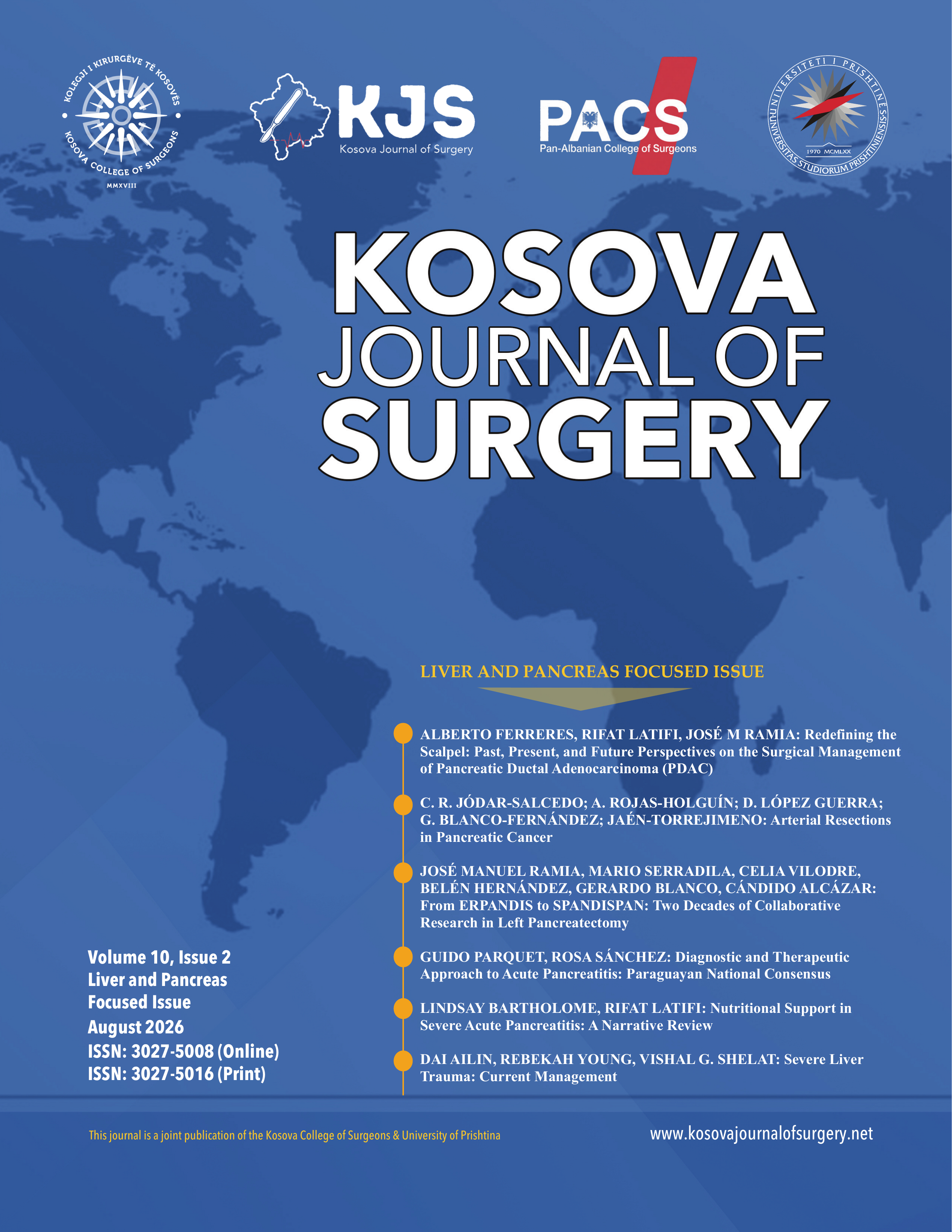
Nutritional Support in Severe Acute Pancreatitis: A Narrative Review
DOI:
https://doi.org/10.59928/q51am055Keywords:
Severe acute pancreatitis, enteral nutrition, total parenteral nutrition, ASPEN, SCCM, AAST, ESPEN, feeding tube complications, hyperglycemia, nutritional support, critical care surgeryAbstract
Background: Severe acute pancreatitis (SAP) develops in up to 20% of patients with acute pancreatitis and carries a mortality of 15–35%, however, mortality may exceed 40% once infected pancreatic necrosis supervenes. The attendant systemic inflammatory response drives a hypercatabolic, hypermetabolic state (resting energy expenditure rising 20–50% above baseline) and precipitates gut-barrier failure, positioning nutritional therapy as a disease-modifying intervention rather than adjunctive care. Aims: The primary aim of this review is to synthesize the current evidence and guideline recommendations governing nutritional support in SAP. The secondary aim is to translate that evidence into practical, bedside-applicable guidance for the acute care surgeon and surgical intensivist—covering the timing of initiation, the route and adequacy of enteral access, the recognition and prevention of feeding-related complications, and the safe delivery of parenteral nutrition when enteral feeding fails—and to delineate the areas in which the evidence remains insufficient to direct practice. Methods: A narrative review of PubMed/MEDLINE and the Cochrane Library (2000–2025) was performed, integrating randomized controlled trials, meta-analyses, and the guidelines of ESPEN, ASPEN/SCCM, the AGA, the ACG, EAST, and the AAST. Results: Meta-analytic data demonstrate that enteral nutrition (EN), versus total parenteral nutrition (TPN), reduces mortality (RR 0.50, 95% CI 0.28–0.91), systemic infection (RR 0.39, 95% CI 0.23–0.65), and multi-organ failure (RR 0.55, 95% CI 0.37–0.81). EN initiated within 24–72 h is uniformly recommended; nasogastric and nasojejunal routes are equivalent. TPN retains a defined role when EN is contraindicated, requiring dextrose infusion below 4–5 mg/ kg/min and glycemic targets of 140–180 mg/dL. Probiotics are contraindicated (mortality 16% vs 6%). Conclusion: Early EN is the evidence-based cornerstone of SAP nutritional management, endorsed across all major guidelines. Route, timing, and access independently determine outcome; TPN is reserved for EN failure under strict metabolic control.
Downloads
Published
Issue
Section
License
Copyright (c) 2026 The Author(s)

This work is licensed under a Creative Commons Attribution 4.0 International License.